Chicken

Chicken

Chicken: Ground & Burgers | Breast, Thighs, Legs & Wings | Whole

Blackwing chicken is pasture raised and free range on family farms in Virginia's Amish country, with no hormones or antibiotics, on a non-GMO vegetarian diet, and processed at about six weeks. Ingredients are checked by a third-party certifier, and each bird is tracked from the egg to our door. The anchors of the case are the ABF whole chicken, boneless skinless breasts, and ABF ground chicken.

6 results

6 Items

CHICKEN BUYING GUIDE

Chicken for Everyday Cooking

Chicken is the weeknight workhorse of the Blackwing meat case—and the cut you reach for when you want a clean, familiar protein without giving up quality. This collection brings together organic and all-natural chicken options across breasts, thighs, wings, drumsticks, whole birds, ground chicken, and organ cuts so you can stock the freezer for salads, sheet-pan dinners, soups, and meal prep.

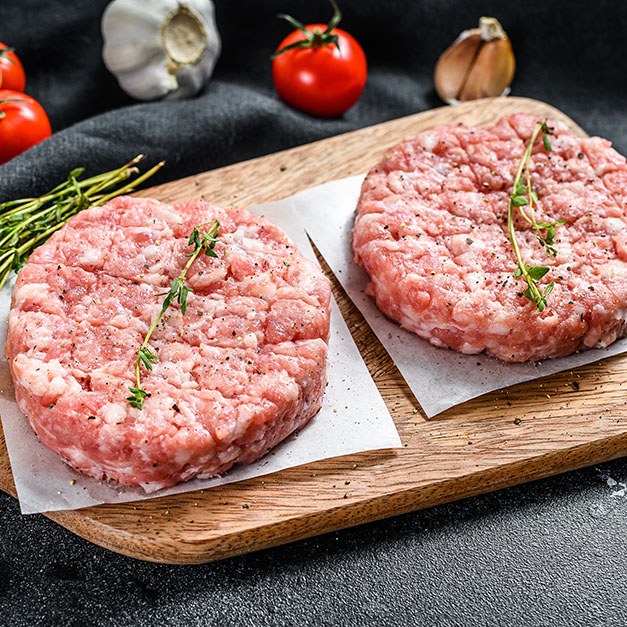
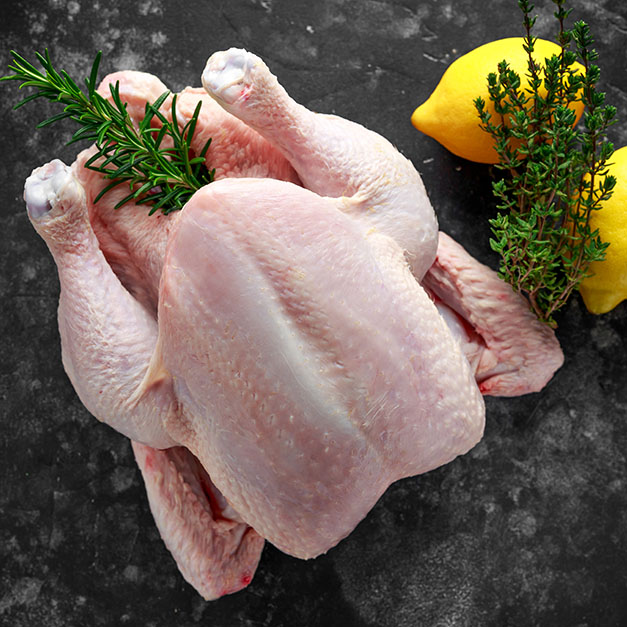
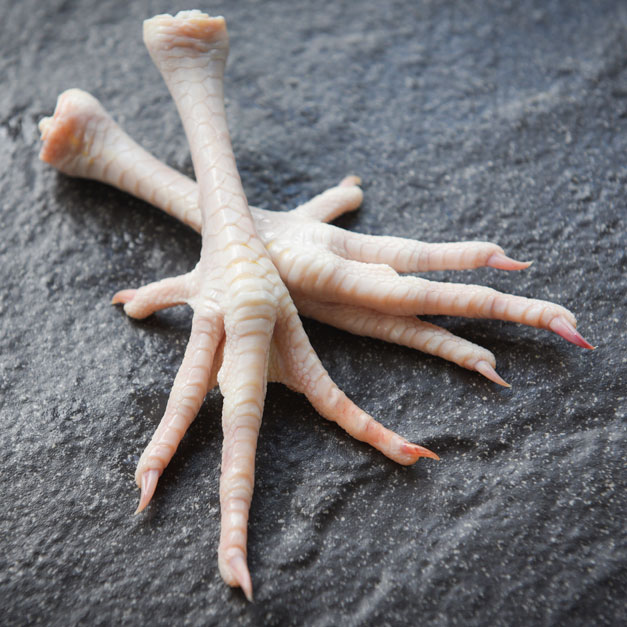
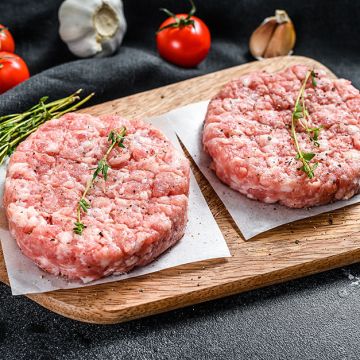
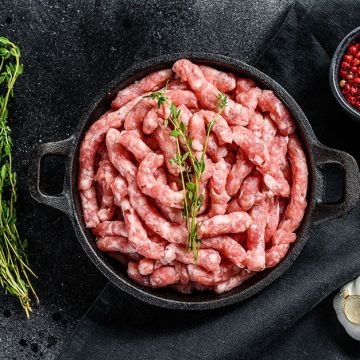
Shop boneless skinless breasts for lean, quick cooking; bone-in thighs and leg quarters when you want more richness; wings for the grill or oven; and whole chickens when you prefer to roast once and use leftovers across the week. Ground chicken and chicken patties make burgers, meatballs, and lighter skillet meals easy. Prefer parts for stock and nose-to-tail cooking? Look to necks, backs, feet, livers, hearts, and gizzards in the organ and bones assortment.

Choose package sizes that match how you cook—single packs for a few dinners, or larger packs when you batch-cook. Explore chicken breasts, thighs, legs & wings, ground chicken & burgers, and whole chickens to narrow by cut. For a different bird with similar kitchen habits, browse turkey; for richer, more celebratory poultry, see duck & game birds. Looking for Halal poultry options? Visit Halal meats.

CHICKEN FAQ

We've Got You Covered

Common questions about how we raise, pack, and ship our meats.

Are GMO's allowed in the feed of animals used to produce Blackwing's Organic Chicken?
All animals from which Blackwing's Certified Organic Chicken is produced must be free of or never fed GMO's. We do not permit GMO's in any feed given to our live stock.
Do your chicken ever have GMO feed given to them?
Organic fed animals are never given GMO grains and Blackwing never allows any of our animals to receive GMO grains.
Why does your chicken retain so much less water than other brands of chicken, organic or not?
The reasons why our organic chicken retains so much less water than other brands has to do with exercise.Muscle doesn't retain water. Our chicken have about half the fat of other chicken brands, which results in a much leaner product and higher muscle content. Fat acts as a sponge, and absorbs a lot more liquid than muscle. Fat takes up approximately 3 times the amount of space as the same weight of muscle.

We also use a different cleansing process than most other chicken producers. Most chicken producers use a chlorine rinsing process. We don't use chlorine, we use a special chilling process called ozonation. Ozone is a compound normally found in the atmosphere; when you use it as a cleansing agent, it's about 3400 times more efficient in killing bacteria than chlorine, and it naturally decays into oxygen, which leaves no chemical residue on the meat. Chlorine tends to leave a chemical residue on the meat, which is why you sometimes have an aftertaste to other brands of chicken. Ozonation allows us to have a pure product from start to finish. With a much leaner product and a quicker cleansing time, our chicken doesn't absorb nearly the amount of water that other chicken brands do.

One other difference is that all kosher products and many all-natural chicken brands roll their birds in salt or soak them in a brine solution, which helps to add weight to the bird by increasing water retention. An alternate method used by all-natural or conventional chicken producers is to soak or inject the dressed birds with sodium phosphate to increase purchase weight and water retention.
Why is there so much less fat in your organic chicken?
Most chicken producers, whether organic, all-natural or conventional, use animal fat or vegetable fats and oils as a significant ingredient in their feed in order to keep their feed costs down and increase the amount of fat in the animal. Certified Organic chicken producers can use vegetable oils and vegetable fats as a feed ingredient under the National Organic program.

Most producers also give their birds less than or around 6 square inches of space per bird, even other organic producers. 6 square inches of space per bird is the minimum space requirement per bird for the National Organic Protocol; there is no space minimum per bird for all-natural or conventional chicken producers.

Our organic chicken is raised without the fats that make up such a significant portion of other diets. We also give our chickens far more space to run around per bird than the minimum requirement, and that doesn't include our outdoor pasture. We make sure that every step of the raising process takes utmost care of the animals and guarantees the most tender, delicious chicken available. The end result is an overall chicken that has less than half the fat of other chicken, and breast meat that is fat-free.
How do you chill and cleanse your organic chicken, and is there any advantage to it?
We chill our organic chicken using an immersion process, as do most chicken processors. Our difference is in how we cleanse our chicken, which we do by using ozonated water. Ozonated water is created by using Ozone (O3), a compound which occurs naturally in our atmosphere. When we use it as a cleansing agent, it is about 3400 times more efficient in killing bacteria than chlorine, which is the normal cleansing agent used for chicken.

Most chicken processors use a communal bath, which is where 700-1000 birds are put into a large bath of water, chlorine is added, and dressed birds are added until the entire lot of birds meets certain bacteria levels. We use much smaller non-communal baths; our birds are put into a bath of ozonated water, with no chlorine added. Ozonated water is much more efficient at killing bacteria, so we don't have to immerse the birds for as long. Since we don't use the same water twice, our chances of cross-contamination in terms of bacteria are virtually zero.

Since ozonated water is an organic compound, there is no aftertaste or chemical residue on our chicken, unlike many other chicken products. Chlorine is labeled as a recognized carcinogen (cancer-causing agent) by the US Department of Agriculture.

The advantages to our chilling and cleansing process are 1. There is virtually no chance of cross-contamination of bacteria; 2. There is no chemical residue on our chicken whatsoever; 3. There is less than 1% retained water in our chicken, compared to an average of 8% water retention of other chicken brands; 4. Our product has the purest taste possible!
How do you ship your meats?
All of our meats are shipped in a cardboard box which is lined on all sides with an 1 1/2" thick styrofoam. We place a thermal insulated liner bag inside the box, pack the meats with dry ice and gel packs, and then top the box with foam insuring that there are no air pockets. We guarantee all shipments so if your package arrives perished we will re-ship or refund your money.
Are your animals humanely handled & processed?
Blackwing created a humane policy of raising, handling & harvesting animals back in 1990, long before it became popular or a concern to consumers.We are animal lovers and would never permit any kind of abuse from birth to harvest.
Are your meats gluten free?
Our Ostrich, Organic beef, Organic Chicken, Bison, Elk, Venison as well as our jerky & sports sticks are all Gluten free. Please note that ALL our products are gluten free.
Are your products certified organic & by whom?
the following organizations under USDA rules certify blackwing products:

beef: CCOF & MOSA.

Bison:CCOF , OCIA & MOSA

chicken & other poultry: Iowa dept. of ag, Mosa, Pa. dept of Ag.& OCIA.

Pork: Mosa & Iowa dept of ag.

All are processed under USDA organic supervision.
Are your animals ever given hormones or growth additives?
Blackwing does not permit any animal we raise or purchase to be administered hormones or growth additives.
Do you feed your animals corn or soy?
None of our animals are fed these except for our Organic Chicken which is given a special diet of organic corn and soy meal.
How are your animals raised? In what environments?
All of our animals are free ranged. Our bison, ostrich and Piedmontese beef all roam on thousands of acres. When they are finished, they are brought to smaller acreage to separate them where they can continue to graze, but are supplemented with alfalfa, flax, and various mineral/vitamins. Our Piedmontese beef are fed organic barley, sweet peas, alfalfa, and flax. All of our 100% organic feed is grown on the same farms that we raise the animals. Our organic beef & bison are raised in Canada, our chicken in Wi.& Michigan.
How does supply & demand effect prices in the healthy meats industry
Americans are recognizing the need to eat healthier as more is understood about the effects of hormones, antibiotics, and chemicals sprayed on our crops are having on our health. Demand is beginning to outgrow our supply and this is having immediate effects on the cost of Organic animals as organic & certified antibiotic/hormone free live stock continue to escalate in cost. Blackwing is steadfastly committied to offering only the cleanest & purest proteins while doing everything possible to keep the live stock cost from becoming excessive or price prohibitive to our customers. Growers will demand higher cost for their live stock when the demand continues to grow beyond the supply.

Our suggestions to Blackwing customers to help ease the burden of rising cost:

a) When possible purchase our value packages of 5 or 10 lb packages. This reduces the shipping costs per pound of purchased product. Blackwing frozen meats may be kept frozen for as long as 2 & in some cases 3 years.

b) consider obtaining a small chest freezer to allow for storage of bulk purchases.

c) take advantage of our special offers published in our newsletters. While we are committed to selling our products at wholesale restaurant prices, we occasionally are able to negotiate favorable pricing with our growers and as a result offer price specials to our retail customers.

Still have questions?

Contact Support